
Cracked Floor Tile? Causes, Repairs & Prevention in Minnesota
Why Floor Tiles Crack in Minnesota: Common Causes, Prevention Tips, and Repair Options
Tile flooring is one of the most durable and long-lasting flooring materials you can install in your home. It's an excellent choice for Minnesota kitchens, entryways, mudrooms, bathrooms, and laundry rooms because it stands up well to moisture, snow, and heavy foot traffic. But even the toughest tile isn't immune to damage.
If you've noticed a cracked or broken floor tile, you're probably wondering what caused it and whether it can be repaired. In many cases, the problem isn't the tile itself. It's what's happening underneath it.
Here's what Minnesota homeowners should know about cracked tile floors and how to prevent them.
Minnesota's Climate Can Be Tough on Tile Floors
Living in Minnesota means your home experiences dramatic seasonal changes. Temperatures can swing more than 100 degrees between winter and summer, causing building materials to naturally expand and contract.
While modern homes are built to accommodate this movement, tile is a rigid material that doesn't flex. If the subfloor moves too much or the tile wasn't installed correctly, stress can build until a crack forms.
That's why proper installation is especially important in Minnesota homes.
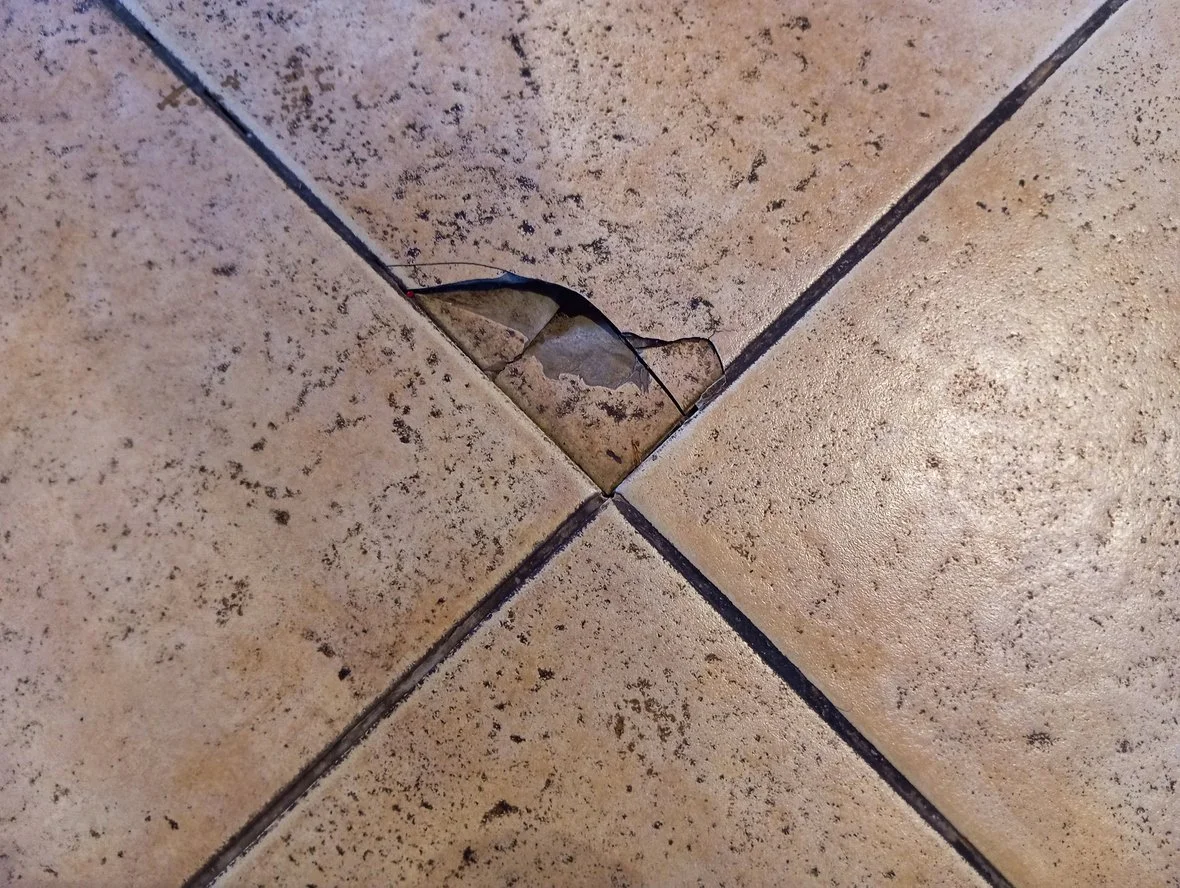
Hot Tip: Save a Few Extra Tiles
When your flooring project is complete, set aside a box of leftover tiles if you have them. Tile styles, colors, and dye lots are regularly discontinued or changed by manufacturers, making it difficult, and sometimes impossible, to find an exact match years later. Keeping a few extra tiles in a dry, protected area gives you the option to replace a damaged tile with one that matches perfectly, helping you avoid a much larger repair or the need to replace an entire section of flooring. It's a small step that can save you significant time, money, and frustration down the road.
Common Reasons Floor Tiles Crack
Subfloor Movement
The most common cause of cracked tile isn't the tile itself. It's movement beneath the floor.
Over time, homes naturally settle. Seasonal frost, shifting soil, and changes in humidity can all contribute to slight movement in your home's framing and subfloor. Even small amounts of flex can eventually crack a tile if the floor wasn't properly prepared.
Before any tile is installed, the subfloor should be flat, solid, and structurally sound. Skipping this step often leads to problems years later.
Heavy Impacts
Accidents happen.
Dropping a cast iron pan, heavy tool, or large appliance component can crack even high-quality porcelain tile. Fortunately, impact damage is usually limited to one or two tiles and can often be repaired without replacing the entire floor.
Freeze-Thaw Conditions
Minnesota winters create another challenge.
Snow, slush, and road salt are constantly tracked into homes during the winter months. Entryways and mudrooms experience frequent temperature changes and moisture exposure. While quality tile handles these conditions well, improper installation or water infiltration beneath the tile can create problems over time.
Proper underlayment and waterproofing are especially important in these high-moisture areas.
Poor Installation
Unfortunately, not every tile floor is installed according to industry standards.
Some of the most common installation mistakes include:
Uneven or improperly prepared subfloors
Inadequate mortar coverage beneath the tile
Using the wrong mortar for the application
Failing to include movement joints
Installing tile over damaged or flexible surfaces
These shortcuts may not cause immediate issues, but they often lead to cracked tiles months or years later.
How to Prevent Cracked Tile
The best way to avoid cracked tile is to start with proper installation.
Choose the Right Tile
Porcelain tile is an excellent option for Minnesota homes because it's dense, durable, and highly resistant to moisture. Ceramic tile also performs well in many applications when installed correctly.
Prepare the Floor Properly
A successful tile installation begins long before the first tile is laid. The subfloor should be inspected for movement, leveled where necessary, and reinforced if needed to provide a stable foundation.
Don't Skip Waterproofing
Bathrooms, laundry rooms, mudrooms, and entryways benefit from proper waterproofing systems that help protect both the tile and the structure beneath it.
Work with an Experienced Installer
Tile installation is equal parts craftsmanship and preparation. Taking the time to properly evaluate the floor, select the right installation materials, and follow industry best practices can help your tile floor last for decades.
Can Cracked Tile Be Repaired?
In many situations, yes.
If only one or two tiles have cracked and matching replacement tiles are available, those tiles can often be carefully removed and replaced without disturbing the surrounding floor.
However, if multiple tiles are cracking throughout the room, it's worth investigating the underlying cause before making repairs. Replacing individual tiles won't solve a subfloor or structural issue if one exists.
A professional inspection can determine whether you're dealing with an isolated repair or a larger flooring problem.
Local Experience Matters
At Kolden Renovations, we've spent more than 25 years installing flooring and tile throughout White Bear Lake, Lino Lakes, and the Twin Cities. We understand the unique challenges Minnesota homes face, from freeze-thaw cycles and seasonal humidity changes to the wear that snow, salt, and heavy winter boots place on your floors.
That's why every project begins with careful preparation and ends with meticulous installation. We're committed to providing homeowners with beautiful, long-lasting results backed by clear communication, exceptional craftsmanship, cleanliness, and reliable service.
If you've noticed cracked tile or are planning a new tile flooring project, contact Kolden Renovations today for a free estimate. We'll help you determine the cause of the problem and recommend the best solution for your home.
Frequently Asked Questions
Can a cracked floor tile be repaired, or does it need to be replaced?
In many cases, a single cracked tile can be removed and replaced without affecting the surrounding floor. However, if multiple tiles are cracking or the damage is caused by movement in the subfloor, replacing the tile alone may not solve the problem. A professional inspection can determine whether a simple repair or a larger flooring repair is the best long-term solution.
Why do floor tiles crack even if they were professionally installed?
While quality installation greatly reduces the risk of cracked tiles, factors like foundation settling, seasonal expansion and contraction, heavy impacts, or moisture issues can still cause damage over time. In Minnesota, freeze-thaw cycles and changing humidity levels can put additional stress on flooring systems.
Can cracked grout cause tiles to crack?
Cracked grout doesn't usually cause tiles to crack, but it can be an early warning sign that the floor is moving. If you notice grout cracking in multiple areas, it's a good idea to have the floor inspected before the problem worsens.
Is it safe to leave a cracked floor tile alone?
A small crack may seem like only a cosmetic issue, but damaged tiles can continue to deteriorate over time. Cracks may allow moisture to reach the subfloor or create sharp edges that become a safety hazard. Repairing damaged tiles early can help prevent more extensive repairs later.
What type of tile is least likely to crack?
Porcelain tile is one of the most durable flooring options available and is an excellent choice for Minnesota homes. When installed over a properly prepared subfloor using quality installation materials, porcelain tile offers exceptional resistance to wear, moisture, and everyday impacts.
How can I prevent tile floors from cracking?
The best way to prevent cracked tile is to start with proper installation. A stable, level subfloor, quality setting materials, appropriate expansion joints, and professional installation all help ensure your tile floor performs well for decades. Choosing the right tile for the room and addressing small issues before they become larger problems can also extend the life of your flooring.